Antique paving in natural stone : Burgundy, Dordogne and travertine
Antique paving, the foundation of floors with character
Visit antique reclaimed natural stone is one of the most durable floor coverings in traditional architecture. Used for centuries in old homes, it is distinguished by its thickness, strength and authentic mineral appearance. Each slab bears the marks of time, with softened edges and natural nuances that lend a unique visual depth to the floor.
Unlike standardized contemporary materials natural stone flooring is designed for longevity and architectural coherence. It is equally suited to heritage interiors and contemporary projects seeking a raw, expressive material. Its presence structures space and creates visual continuity between different rooms.
Burgundy slabs: sobriety and elegance
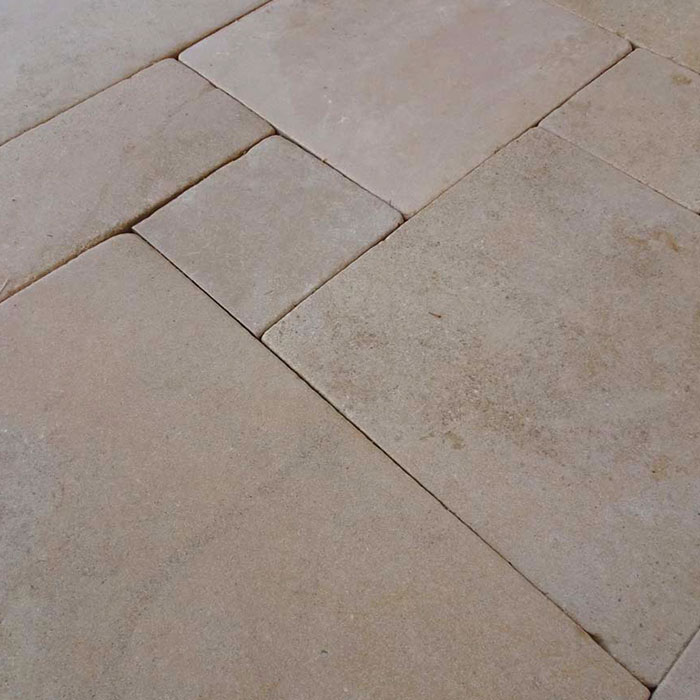
Visit Burgundy tiles are renowned for their light hue and fine grain. Sourced from French limestone quarries, they offer a palette of tones ranging from soft beige to nuanced cream. This type of natural stone brings a great deal of luminosity to spaces, making it a preferred choice for living rooms, kitchens and corridors.
Burgundy slabs are also distinguished by their versatility. It can be laid in Roman opus or in a regular pattern, depending on the desired effect. Combined with Antique Reclaimed Terracotta or solid wood elements, it contributes to a harmonious reading of the architecture, between sobriety and tradition.
Dordogne paving and travertine: material and relief
Visit Dordogne paving is characterized by more pronounced shades and a slightly more rustic texture. This natural stone provides relief and a strong mineral presence, ideal for floors with character or transition areas such as entrances and halls. Its robustness also makes it suitable for high-traffic areas.
Visit travertine tilesoffer a more Mediterranean aesthetic. Their naturally veined surface and cavities give the floor a lively appearance. Travertine can be used both indoors and outdoors, particularly for terraces or pool surrounds, in continuity with a traditional stone floor. old floor in stone.
Preparing the substrate and laying old paving
Laying old paving requires rigorous preparation of the substrate. It must be stable, flat and perfectly drained, especially outdoors. Indoors, a mineral substrate is recommended to respect the breathability of natural stone. The choice of mortar and the thickness of joints have a direct influence on the final appearance and durability of the floor.
Prior layout planning enables us to anticipate the distribution of formats and shades. Mixing tiles from different batches contributes to a natural, balanced look. This step is essential to preserve the authenticity of the paving and avoid areas that are visually too homogeneous.
Care and ageing of natural stone
Natural stone paving evolves over time. Its maintenance requires simple gestures and non-aggressive products. Regular cleaning with clear water or neutral soap is generally sufficient to preserve its appearance. Breathable water-repellent treatments can be used in areas exposed to humidity, without altering the texture of the stone.
Unlike industrial coverings, old paving improves with use. Micro-wear contributes to its patina and reinforces its authentic character. For technical support tailored to your project, please contact us via the page contact.
Combining old paving with other materials
Antique paving naturally finds its place alongside other heritage materials. It blends harmoniously with oak parquet to create contrasts between mineral and wood. This combination gives structure to spaces while maintaining aesthetic coherence.
In global renovation projects, the dialogue between stone, terracotta and wood reinforces the architectural identity of the site. Antique paving then becomes a central element of the project, both functional and meaningful.
An antique floor for contemporary projects
Used in modern architecture, antique paving brings a depth and authenticity difficult to reproduce with new materials. Its rough texture contrasts with clean lines and contemporary volumes, creating a balance between tradition and modernity.
This choice is part of a sustainable approach that promotes the reuse and durability of natural materials. Old-fashioned paving in natural stone remains a preferred solution for demanding, timeless projects.
 Français
  English