Traditional frameworks and old beams : structure and character
The traditional frame, a pillar of ancient architecture
The traditional framework is the fundamental framework of older buildings. Made from solid wood assembled using tried-and-tested techniques, it ensures both the structural stability and the architectural identity of the structure. Unlike industrial structures, traditional timber framing relies on generous cross-sections, mortise-and-tenon joints and a design that's built to last for generations.
In renovation projects, retaining or reusing an existing traditional timber framing helps preserve the building's authenticity. Visible or partially visible, it structures volumes and creates a direct dialogue with other old materials such as stone or terracotta.
Antique wooden beams: oak and character
Visit antique beams solid wood, particularly oak, are sought-after for their sturdiness and aesthetic appeal. Derived from dismantled buildings or old barns, they feature a natural patina, traces of tools and sometimes original assembly marks. These elements tell the story of the building and add incomparable visual depth to the spaces.
The antique oak beam can be used as a load-bearing element, lintel or decorative beam. Its integration into a contemporary project creates a strong contrast between old structures and modern lines, while maintaining architectural coherence.
Reclaimed rafters and framing members
Visit wooden rafters and secondary structural members play an essential role in the composition of old roofs and ceilings. When reused, these elements retain their solidity while providing visual homogeneity with the main beams. Their finer cross-section allows a variety of uses, notably for exposed ceilings or decorative structures.
Visit salvaged old frames offer a sustainable alternative to new wood. They integrate naturally into heritage-friendly projects and can be combined with wooden floors. natural stone or Antique Reclaimed Terracotta.
Reuse and selection of old frameworks
Reusing old frameworks requires a rigorous selection process. Each piece is checked for straightness, mechanical strength and the absence of major pathologies. Old-growth timber, often from slow-growing old-growth forests, has a higher density than contemporary timber.
This structural quality makes it possible to envisage a new use, whether for a complete renovation or for the occasional integration of old elements in a new construction. Reuse is thus part of a sustainable approach that respects resources.
Integrating a timber frame into a contemporary project
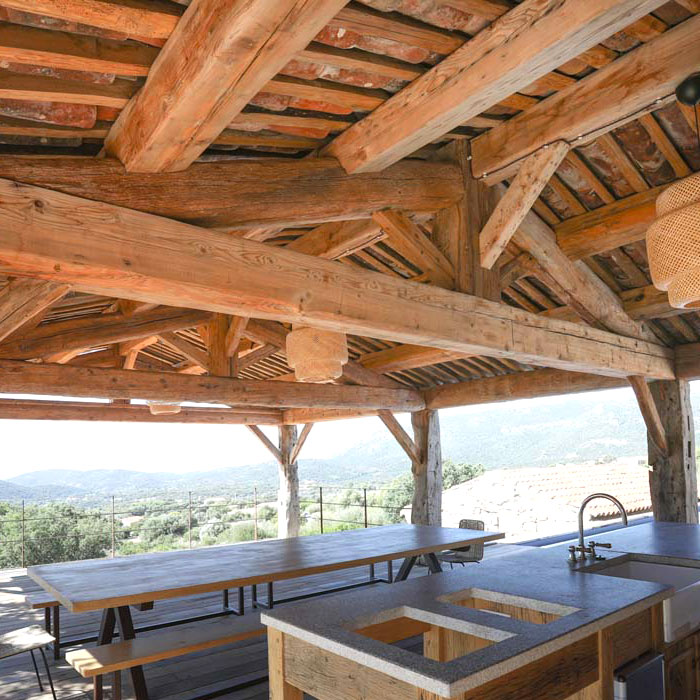
Antique frameworks and beams find their place in contemporary projects. Leaving a wood framing provides structure and warmth to uncluttered spaces. This contrast enhances the raw material and reinforces the identity of the space.
Combined with a oak parquet or stone walls, the old framework becomes a central element of the architectural project.
Maintenance and durability of wooden structures
Old frames require little maintenance when properly installed. Regular humidity control and proper ventilation are all that's needed to preserve the structure. Treatments must be compatible with the old wood so as not to alter its breathability.
For any project involving traditional framing or old beams, we recommend that you request personalized assistance via the contact.
A structure that conveys meaning and aesthetics
Choosing a traditional timber frame means making the most of ancestral know-how and a living material. These structures bear witness to a sustainable construction approach, where each element is designed to stand the test of time.
In renovations as in contemporary creations, ancient frameworks and beams bring a strong architectural dimension and an authenticity difficult to reproduce with industrial materials.
 Français
  English