
Zelliges and decorative tiles : craftsmanship, color and architecture
Zellige: a handmade tile with a strong identity
Visit zellige is an artisanal tile made by hand using time-honoured techniques. Each tile is cut by hand, resulting in slight variations in shape and thickness. These irregularities are an integral part of its aesthetic, giving the wall a lively appearance, far removed from the perfectly calibrated surfaces of industrial production.
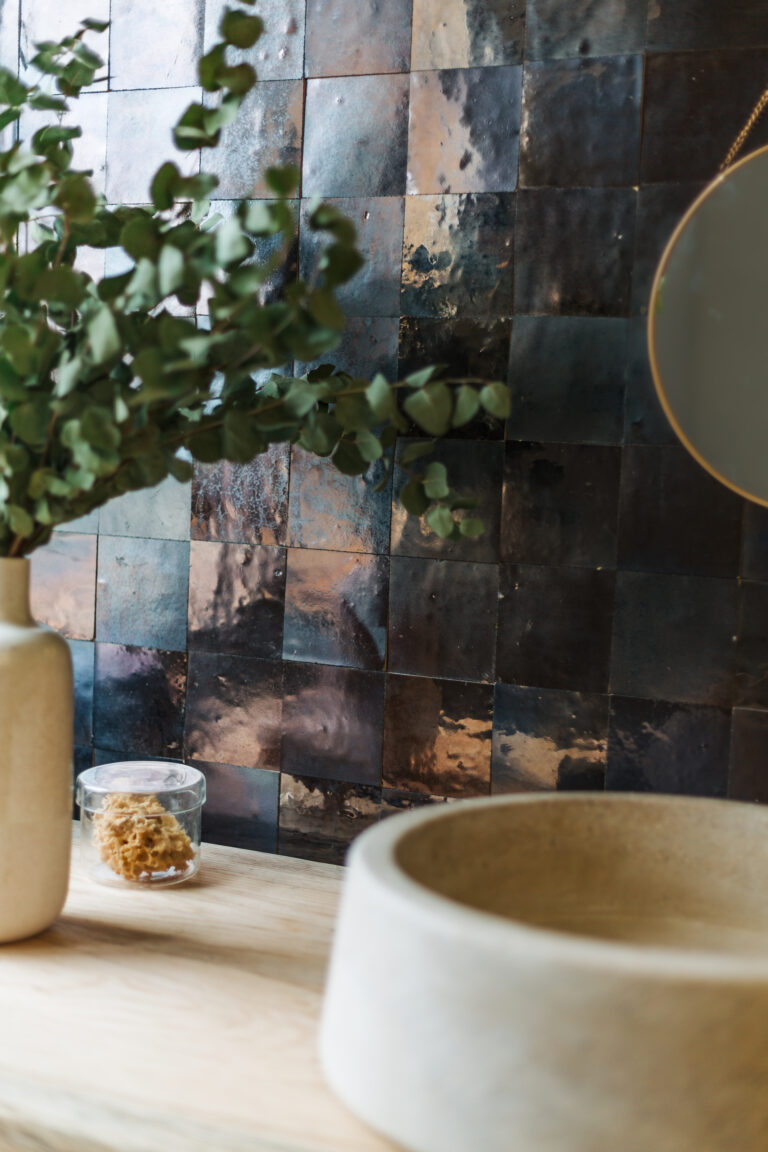
Traditionally used in Moroccan architecture, zellige today finds its place in contemporary projects, whether as a credenza, bathroom or wall cladding. Its glazed surface captures light, creating subtle reflections that enhance the visual depth of spaces.
Moroccan zellige: colors, reflections and materials
Visit Moroccan zellige is distinguished by the intensity of its colors and the richness of its glazes. Among the most frequently used shades, light-colored zelliges bring light into spaces. The white zellige from Fez is appreciated for its clean, luminous hue, while milky white zellige offers a softer, more nuanced rendering.
These chromatic variations allow zellige to be adapted to different interior styles, from the most traditional to the most contemporary. Their glazed surface reflects light irregularly, giving the wall a constant vibration.
Green zellige and other decorative shades
Visit green zellige is particularly sought-after for its chromatic depth. Depending on the light and the viewing angle, its shades vary from deep green to lighter green. This natural variation gives the cladding a lively, organic appearance.
The patinated white zelliges, like the washed white zelligeThey are also widely used to create sober, luminous backgrounds. They can be used to enhance other antique materials, while retaining a strong artisanal presence.
Zellige tiles and wall cladding
Visit zellige tiles is designed primarily for wall surfaces. It can be installed as a facing to give structure to a space without weighing it down. Thanks to its high-gloss enamel, it is highly resistant to humidity, making it an ideal choice for kitchens, bathrooms and wet rooms.
Zelliges can be used as continuous surfaces or in decorative touches. Formats and shades available in the zelliges offer great compositional freedom.
Combining zellige with old materials
Zellige naturally finds its place alongside antique materials. Combined with natural stone flooringIt creates a contrast between glossy surface and raw material. This contrast reinforces the architectural interpretation of the space.
It can also dialogue with Antique Reclaimed Terracottaparticularly in kitchens and transitional rooms. These associations reinforce the aesthetic and heritage coherence of the project.
Laying and caring for zellige
Laying zellige requires particular care. As the tiles are irregular, the aim is not perfect flatness but overall regularity. Joints must be adapted to use and exposure to humidity.
Zellige is easy to care for. Gentle cleaning is all it takes to preserve the enamel's lustre. For specific projects or special technical requirements, we recommend that you seek advice via the page contact.
Durable, timeless decorative tiles
Choosing zellige means incorporating a timeless, traditional material into your project. Its ability to play with light and color makes it a strong decorative element, without being intrusive.
From contemporary interiors to heritage renovations, zellige provides a lasting visual signature and real architectural value.
 Français
  English