
Reclaimed Pavers and Antique Outdoor Stone Flooring
Why reclaimed pavers define outdoor architecture
Reclaimed pavers are widely used in outdoor architecture because they combine durability with a natural, time-worn appearance. Salvaged from historic streets, courtyards, and rural buildings, these stones already display softened edges and surface patina. This gives exterior spaces an immediate sense of authenticity that new materials struggle to replicate.
In both traditional and contemporary projects, reclaimed pavers help structure outdoor areas such as courtyards, terraces, and garden paths. Their natural variation in tone and texture allows large surfaces to remain visually balanced without appearing repetitive.
Limestone pavers for exterior flooring
Antique outdoor stone flooring is often based on limestone because of its strength and natural slip resistance. Limestone ages gracefully outdoors, developing subtle tonal changes while maintaining its structural integrity. This makes it suitable for high-traffic areas and long-term exposure to weather.
Examples such as Bayadère pavers illustrate how reclaimed stone can bring rhythm and depth to exterior layouts while remaining compatible with both historic and modern architecture.
Antique cobblestones and rustic pavements
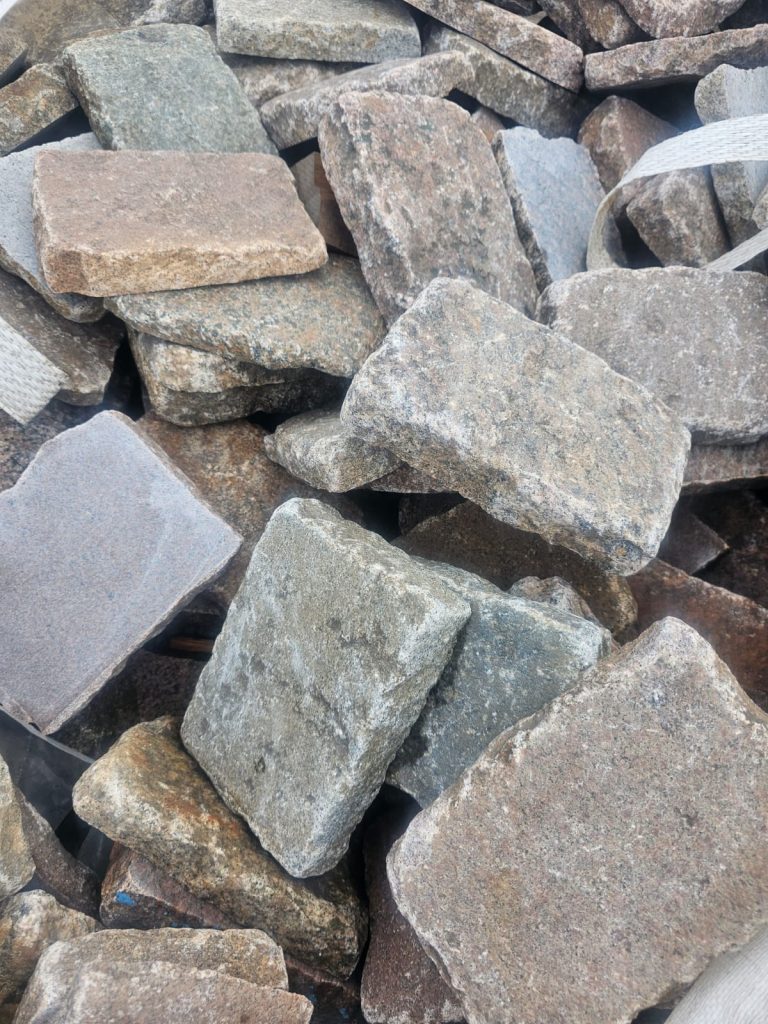
Antique pave tiles and cobblestones are frequently used to create rustic, grounded outdoor surfaces. Their irregular shapes and worn faces contribute to a tactile experience underfoot, reinforcing the connection between architecture and landscape.
A reference such as Antiqued cobblestone Burgundy shows how reclaimed stones can be used to design courtyards and access paths that feel established and timeless rather than newly installed.
Step stones and garden circulation
Reclaimed stone step elements are commonly used to organize garden circulation while preserving planted areas. Rather than covering the entire surface, step stones allow controlled movement through lawns, gravel, or planted zones.
A product such as Step stone limestone provides a practical and visually discreet solution for garden paths, transitions between levels, or informal outdoor walkways.
Outdoor terraces and continuity with interiors
One of the strengths of reclaimed stone flooring is its ability to create continuity between indoor and outdoor spaces. Using similar tones and finishes outside and inside helps blur boundaries and reinforces architectural coherence.
Outdoor paving solutions such as natural stone pool coping demonstrate how reclaimed or antiqued stone can be adapted to terraces, pool surrounds, and transition zones without compromising comfort or safety.
Installation principles for reclaimed outdoor stone
Installing reclaimed pavers requires careful preparation. Proper drainage, stable foundations, and accurate leveling are essential to ensure long-term performance. Because reclaimed stones vary in thickness, installation is guided by surface alignment rather than strict dimensional consistency.
Joint treatment and edge detailing play an important role in the final appearance. When done correctly, the surface remains functional while preserving the natural irregularity that defines antique outdoor stone flooring.
Choosing reclaimed pavers for durable landscapes
Reclaimed pavers are selected for their proven durability and architectural value. They age naturally, resist wear, and integrate seamlessly into both rural and urban landscapes.
To confirm suitability for your project and align material choice with site conditions, technical guidance is available via the contact page.
 Français
  English