Antique parquet and old floors : solid wood, installation and finishing
Why choose antique parquet for a floor with character?
Visit antique parquet provides a presence that new floor coverings can't match. Boards made from wood that has matured and been worked over long periods of time have a density, stability and natural patina that immediately lend relief to the space. In a renovation, it allows you to rediscover the spirit of a place and create a coherent continuity with authentic materials. In contemporary interiors, it often serves as an anchor, contrasting with sober lines and uncluttered volumes.
Beyond its aesthetic appeal, an antique parquet floor is distinguished by its ability to be restored. Light sanding, localized refinishing, replacement of strips, natural finishes: the floor can evolve over the years without losing its identity. This logic of durability works well with mineral floors, such as natural stone flooring in an entrance hall, or terracotta in a kitchen, to create coherent transitions.
Antique oak parquet: density, color and longevity
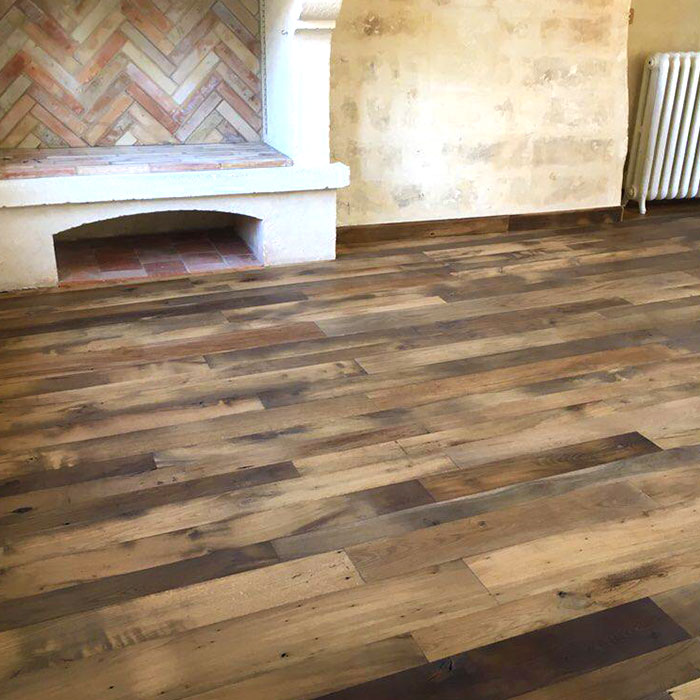
Visit antique oak parquet is prized for its strength and grain. Oak has a stable structure, suitable for living rooms and high-traffic areas. Shades range from honey to deep brown, depending on the wood's oxidation, exposure to light and historical finishes. Knots, old cracks and tool marks are part of the material's heritage, provided they are selected and integrated with consistency.
For renovation, old oak can be used to create a "lived-in" floor. When creating a new space, it provides structure and a natural dialogue with stone walls or lime plaster. To preserve the material, breathable finishes are preferred. An oiled finish highlights the grain. A wax finish gives a softer, more traditional look. The choice depends on use, level of traffic and desired maintenance.
Antique solid parquet and floors: selection criteria
A antique solid parquet and old floors are selected first and foremost on technical criteria. Usable thickness, flatness, moisture content, board stability and joint condition determine the feasibility of installation and the durability of the result. Dimensional variations are normal with old wood, but must be anticipated in the layout, especially near walls, thresholds and connecting areas.
Aesthetics count as much as technique. A floor that is too homogeneous can appear artificial. Conversely, an uncontrolled mix can create an impression of disorder. The objective is balance: distribute nuances, alternate widths if necessary, and maintain consistency throughout the room. To reinforce the identity of the space, an antique parquet floor can be combined with Antique Reclaimed Terracotta in service areas, to create a coherent architectural whole.
Traditional patterns: chevron, Hungarian stitch and reading volumes
Installation patterns give the floor an immediate identity. Herringbone parquet structures the perspective and accentuates the depth of a room. Visit herringbone oak parquet brings a more graphic rhythm, often associated with Haussmann-style apartments and prestigious interiors. These patterns require a particularly even support and careful preparation, as the slightest drift can be seen in the alignment of points and joints.
The choice of motif must be in keeping with the architecture. In simple volumes, a strong pattern can become the central element. In an interior already rich in detail, a straight or staggered pattern can preserve balance. The aim is to serve the space, not impose a decor. To validate the choice, a layout and sampling in a real situation are recommended, taking into account the existing light and walls.
Wood and uses: antique fir parquet and more rustic atmospheres
Visit antique fir parquet refers to a more rustic aesthetic, common in country houses and rehabilitated farm buildings. Softer than oak, it is more distinctive, but this evolution often contributes to the desired patina. Fir is well suited to bedrooms, offices and spaces where a warm, less formal atmosphere is desired.
To preserve a softer wood, we prefer suitable finishes and gentle maintenance. An oiled finish can nourish the fiber and facilitate localized refinishing. What's important is consistency with the overall project and the constraints of use. In a heritage setting, fir can be used in dialogue with a mineral environment, such as a natural stone floor in a hallway, or with terracotta in a kitchen.
Installation, support and finishing: securing durability
Laying determines the stability of the parquet. Flat subfloor, moisture control, suitable underlay and choice of fixing (glued, nailed or floating, depending on the context) must be defined in advance. Approximate adjustments often result in squeaking, gaps between boards or warping. On old wood, precise layout is essential to distribute variations and ensure a regular reading of the floor.
Finishes must respect the material. An oil finish enhances the grain and facilitates refinishing. A wax finish gives a more traditional look, but requires more regular maintenance. Film-forming varnishes, depending on use, can mask texture and complicate localized repairs. For recommendations tailored to your specific project, the best thing to do is to contact us via the contact.
Passing on an old parquet floor: coherent heritage and value in use
A antique parquet is more than just a covering. It's an architectural element that contributes to the identity of a place. In renovation, it helps to restore the coherence of a building's heritage. In contemporary construction, it introduces a living material, capable of aging with elegance. Its reparability and longevity make it both a rational and aesthetic choice.
Combining parquet with other antique materials creates clear, durable spaces. The floor becomes a stable base on which the project can evolve without losing its character. This relationship with time, materials and craftsmanship is precisely what makes well-chosen and well-laid antique parquet so valuable.
 Français
  English