
French Oak Parquet Flooring : Reclaimed Wood Floors with Heritage
Why French oak parquet remains a reference in classic interiors
French oak parquet flooring is valued for its density, grain, and ability to age with elegance. Reclaimed oak brings an additional layer of character: a natural patina, subtle tonal variation, and the "lived-in" texture that contemporary materials struggle to reproduce. In renovation work, parquet helps restore architectural coherence. In modern builds, it anchors interiors with a warm, authentic surface that balances clean lines and minimalist finishes.
For buyers looking for a curated selection of parquet, the Parquet floors range is a practical entry point. It supports different design intents, from understated plank layouts to stronger patterns that structure the whole room.
Reclaimed wood flooring: material performance and sustainability
Reclaimed wood flooring is not only a design choice. It is also a long-term performance choice when the boards are properly selected and prepared. Older timber often comes from slower-grown trees, which can mean tighter grain and stable behavior once acclimated and installed correctly. Reclaimed floors also align with circular construction practices, limiting demand for new logging while extending the life of existing materials.
If your project includes different wood families, the broader antique flooring selection can help compare reclaimed options and find a coherent tone across rooms.
French oak flooring: selecting tone, grain, and visual rhythm
Within oak flooringvisual decisions matter as much as technical ones. A honey-beige oak can brighten a space. A deeper, older oak can add weight and contrast. Grain and knot frequency influence whether the result feels refined or rustic. The goal is consistency at room scale, with enough natural variation to avoid a "manufactured" look.
For projects that require a tailored approach, reclaimed oak can also be prepared and adapted to layout constraints, thresholds, and transitions, helping maintain architectural continuity from one zone to the next.
Herringbone and chevron: classic French parquet patterns
Patterns such as herringbone and chevron are widely associated with Parisian and Haussmann interiors because they bring structure and movement to a room. A chevron layout emphasizes perspective and creates a strong architectural axis. A product reference like Reclaimed Oak Chevrons Parquet illustrates how this traditional pattern can feel both timeless and refined.
For a more linear and understated approach, classic parquet references like Old oak parquet can suit a wide range of interiors, from rustic renovations to modern apartments.
Panel parquet: Versailles floors and historic craftsmanship
For statement interiors, panel parquet introduces a different scale and a more formal presence. Versailles-style layouts are known for their geometric panel construction, often used in reception rooms and heritage projects. A reference like Versailles parquet helps communicate that historic look while remaining compatible with contemporary design when balanced with calm materials and neutral walls.
Panel parquet is also a practical way to give rhythm to large rooms where narrow strips may feel visually busy. The right panel scale can make the floor read quieter and more architectural.
Antique planks and fir flooring: softer, more rustic atmospheres
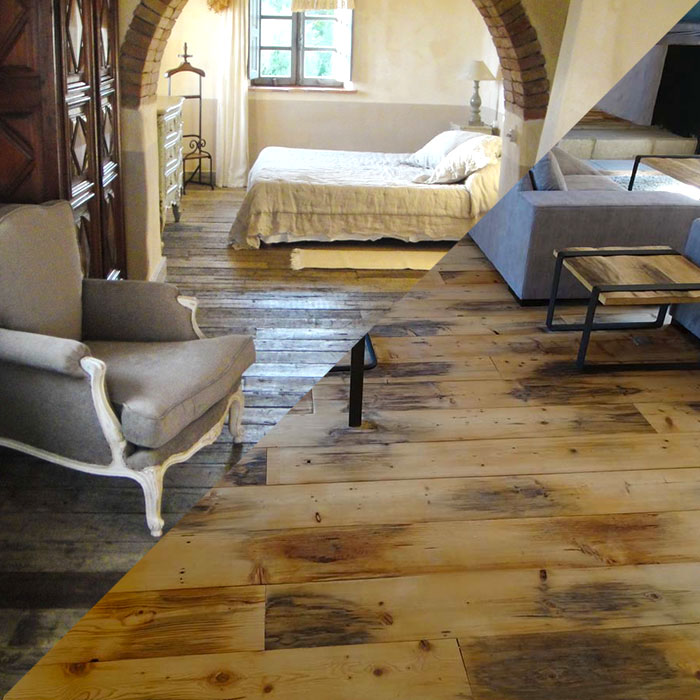
Not every project calls for oak. Antique fir and reclaimed plank floors can create a lighter, softer atmosphere, especially in bedrooms and upper levels. If your design intent is rustic or farmhouse-inspired, exploring antique fir flooring can be relevant. These floors often bring visible grain, gentle wear, and a relaxed, lived-in reading.
For broader reclaimed options, a product reference like Old wood parquet supports flexible layouts and can be adapted to different interior styles depending on finish and installation.
Installation, finishing, and project alignment
Successful parquet flooring depends on decisions made early: subfloor stability, humidity control, installation method, and finish selection. Oils and waxes preserve a natural feel and simplify local repairs. More protective finishes may suit higher-traffic zones but can reduce the tactile texture that makes reclaimed wood appealing. Planning transitions to stone or terracotta also matters, especially in open layouts.
For help selecting the right floor and confirming suitability for your project, use the contact page. If you already have a shortlist, you can also use Request a quotation to consolidate your selection.
 Français
  English