
French Terracotta Tile Flooring for Interior and Exterior Spaces
Terracotta tile flooring in French architecture
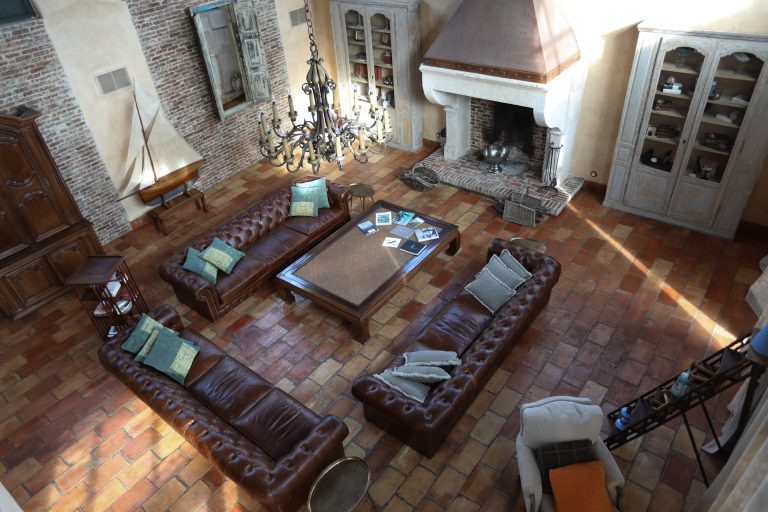
French terracotta tile flooring has been used for centuries in homes, farmhouses, and historic buildings. Made from natural clay and fired using traditional methods, terracotta tiles develop warm tones and a distinctive surface texture. Over time, they acquire a patina that reflects use, light, and environment, giving floors a lived-in and authentic character.
Unlike industrial tiles, terracotta floors are valued for their irregularity. Slight variations in thickness, color, and edge profile create surfaces that feel natural rather than manufactured. This makes terracotta an ideal flooring choice for projects where authenticity and material honesty are essential.
Reclaimed terracotta tiles for interior floors
Reclaimed terracotta tiles are commonly used in kitchens, living rooms, and circulation areas. Their thermal mass helps regulate indoor temperatures, while their matte surface provides a comfortable feel underfoot. These qualities explain why terracotta remains a reference for traditional French interiors.
The antique tiles selection allows designers to explore different tones and formats, from classic rectangular tiles to regional shapes, ensuring visual continuity throughout the interior.
Red clay floors and traditional layouts
Red clay tile floors bring warmth and depth to interior spaces. Their color ranges from light orange to deep red depending on the clay source and firing process. This chromatic richness pairs naturally with stone walls, lime plaster, and reclaimed wood.
In formal interiors, flat terracotta formats such as antique flat tiles create structured, rhythmic floors. In more rustic settings, mixed formats enhance the natural, handcrafted feel of the space.
Terracotta tiles for exterior flooring
Terracotta tiles for exterior use are selected for their resistance and natural grip. When properly installed, they perform well on terraces, courtyards, and transitional outdoor spaces. Their porous structure allows moisture regulation, which helps prevent surface damage over time.
Exterior terracotta flooring creates visual continuity between inside and outside areas, a key principle in Mediterranean and southern French architecture.
Hexagonal tomettes and French regional identity
Hexagonal terracotta tiles, often called tomettes, are emblematic of French regional flooring traditions. Their geometry allows fluid circulation and subtle visual movement across the floor surface.
Formats inspired by historic models, such as antique red terracotta tilespreserve the spirit of traditional floors while meeting modern installation requirements.
Terracotta and outdoor Provençal spaces
In Provençal architecture, terracotta floors are often extended to covered terraces and outdoor living areas. Their warm color blends naturally with stone walls and surrounding landscapes.
Historic references such as old Provencal tiles illustrate how terracotta surfaces contribute to a cohesive architectural language across indoor and outdoor zones.
Installation and long-term performance
Installing terracotta tile flooring requires attention to substrate preparation, joint width, and compatible mortars. Because reclaimed tiles vary naturally, installation is guided visually rather than mechanically, preserving the authenticity of the surface.
When properly sealed and maintained, terracotta floors age gracefully and remain durable for decades. For advice on selecting the right terracotta tiles for your project, guidance is available via the contact page.
 Français
  English