
French Zellige Tiles : Handmade Wall Tiles and Bejmat Surfaces
What defines French zellige tiles
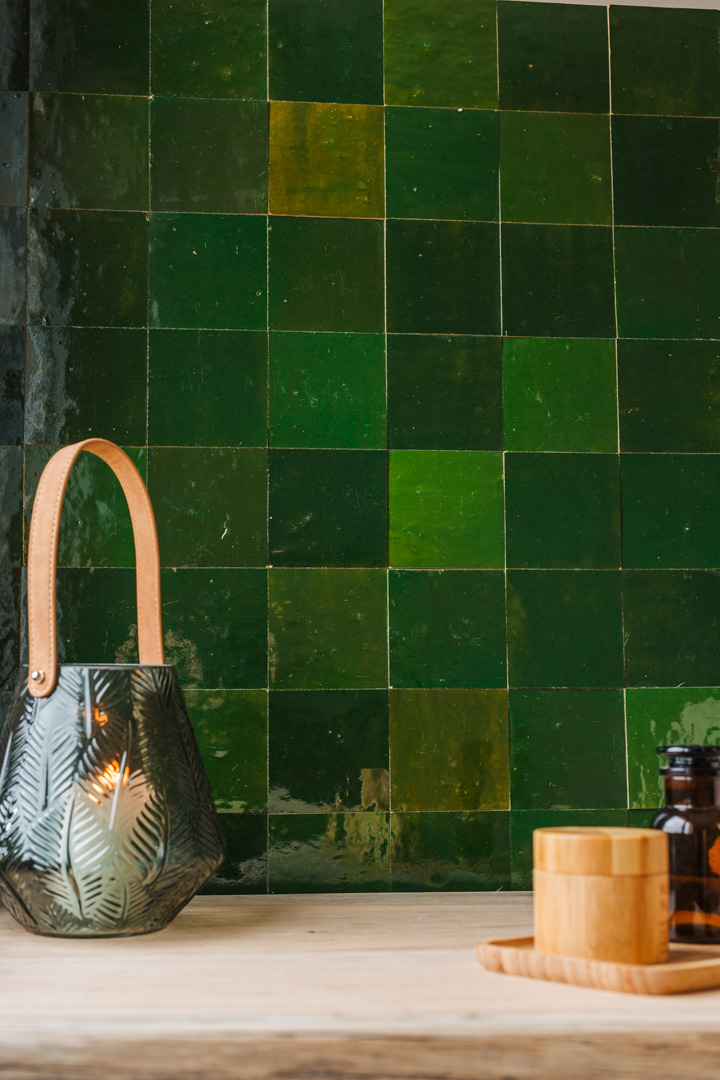
French zellige tiles are appreciated for their handcrafted quality and vibrant surface variation. Each tile is cut and finished by hand, resulting in subtle differences in size, glaze depth, and edge profile. These irregularities are not defects. They are the defining features that give zellige its visual rhythm and sense of movement across a wall.
Used historically in Mediterranean and North African architecture, zellige tiles are now widely specified in contemporary interiors. Their reflective glaze interacts with light, creating depth that changes throughout the day. This makes them particularly effective for vertical surfaces where texture and reflection are desired.
Zellige wall tiles for kitchens and bathrooms
Zellige wall tiles are most commonly used in kitchens, bathrooms, and wash areas. Their glazed surface resists moisture and splashes, making them suitable for backsplashes, shower walls, and vanity surrounds. Beyond performance, zellige tiles introduce a tactile, handcrafted presence that softens hard architectural lines.
For a broad overview of formats and colors, the zelliges category provides a clear starting point. It allows designers to compare tones, finishes, and tile families before refining their selection.
Black zellige tiles: depth and contrast
Black zellige tiles are chosen to create strong visual contrast and architectural definition. Their deep, glossy surface absorbs and reflects light simultaneously, producing a dramatic yet refined effect. Black zellige works particularly well in contemporary kitchens, minimalist bathrooms, and feature walls where a bold statement is required.
Within the black zellige selection, tonal variation plays a key role. Slight shifts in shade and glaze intensity prevent the surface from appearing flat, preserving the handcrafted character even in darker palettes.
Bejmat tiles: thicker formats for floors and walls
Bejmat tiles are a traditional variation of zellige, characterized by their thicker profile and rectangular shape. Originally designed for flooring in high-traffic areas, bejmat tiles are now widely used on both floors and walls, especially where durability and visual texture are equally important.
The bejmat range offers a more grounded aesthetic compared to classic zellige. Its matte or lightly glazed finish creates a calmer surface, making it suitable for larger areas where subtlety is preferred over high reflectivity.
Combining zellige with natural materials
Zellige tiles pair naturally with materials such as stone, terracotta, and wood. Their glossy, irregular surface contrasts with the matte texture of natural stone or the warmth of timber. This dialogue between materials is often used to create balanced interiors that feel both crafted and contemporary.
In kitchens, zellige backsplashes complement stone countertops and wooden cabinetry. In bathrooms, they soften the look of limestone or concrete surfaces, adding depth without overwhelming the space.
Installation principles for handmade tiles
Installing zellige requires a different approach than installing industrial tiles. Because each piece varies slightly, alignment is guided visually rather than mechanically. This allows the wall to maintain a natural rhythm while avoiding rigid grid patterns.
Joint width is part of the design. Slightly irregular joints emphasize the handmade quality and help accommodate dimensional variation. Careful lighting design further enhances the reflective qualities of the glaze.
Choosing zellige for lasting decorative impact
Choosing zellige tiles is a commitment to craftsmanship and material authenticity. Their appearance evolves with light and time, giving walls a dynamic presence that remains relevant across design trends.
For guidance on selecting the right zellige or bejmat format for your project, detailed advice is available via the contact page.
 Français
  English