
Antique French Beams and Reclaimed Timber Structures
Why antique French beams define architectural character
Antique French beams are structural elements that also carry strong visual identity. Reclaimed from historic buildings, barns, and farmhouses, these beams show traces of time through softened edges, tool marks, and natural patina. Unlike new timber, reclaimed beams bring immediate depth to a space and help anchor interiors in a clear architectural language.
In renovation projects, antique beams are often used to restore the original proportions of a building. In contemporary architecture, they act as contrast elements, balancing clean surfaces with raw material presence. Their scale and texture naturally draw the eye upward, reinforcing volume and spatial rhythm.
Reclaimed timber structures: performance and longevity
Reclaimed timber structures are valued not only for aesthetics but also for their mechanical stability. Old-growth wood was typically cut from slow-growing trees, resulting in tighter grain and higher density. Once reclaimed, cleaned, and properly prepared, these beams offer excellent long-term performance.
Because the wood has already completed its natural movement cycle, reclaimed beams tend to be more dimensionally stable than newly milled timber. This makes them suitable for visible structural applications where cracking and deformation must remain limited over time.
Oak beams and traditional French construction
Antique oak beams are the most common reference in traditional French construction. Oak was historically chosen for its strength, resistance, and availability. Its dense grain and deep color create a strong architectural presence, especially in open-plan interiors or double-height spaces.
Oak beams are frequently used in ceiling structures, load-bearing frames, and visible trusses. Their visual weight helps define zones within large volumes, making them particularly relevant in converted barns or historic properties adapted for modern living.
Fir and softwood beams: lighter structures and interiors
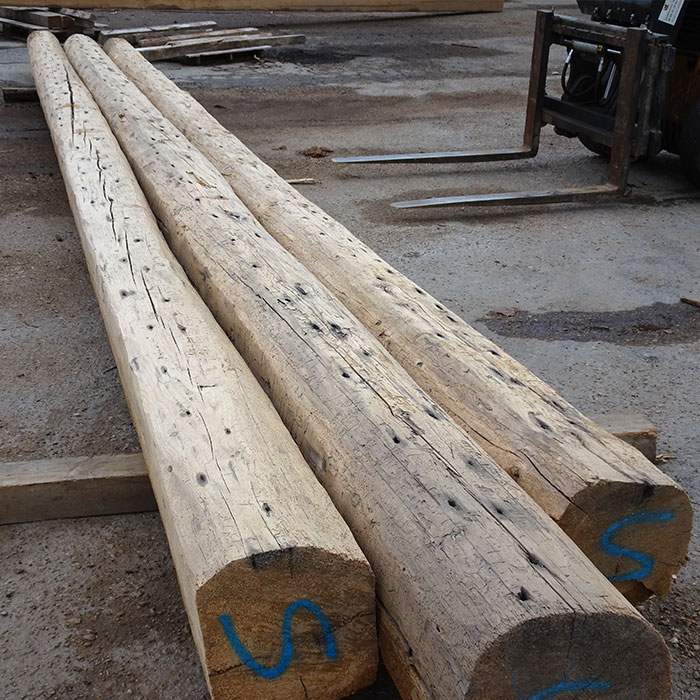
In addition to oak, reclaimed fir and other softwoods were widely used in regional French construction. These materials offer a lighter visual presence while still providing structural reliability when correctly sized. Fir beams are often found in roof structures, secondary frames, and interior ceilings.
Their softer tone works well in brighter interiors, mountain homes, or projects where a less dominant timber element is desired. Over time, reclaimed fir develops a warm patina that complements stone floors and lime-plastered walls.
Using antique beams in modern architecture
One of the strengths of antique beams is their adaptability to modern design. They can be integrated into contemporary layouts without replicating historical styles. Exposed beams can frame open kitchens, define living areas, or emphasize circulation axes without overwhelming the space.
In minimalist interiors, a single reclaimed beam can act as a focal point. In larger projects, full timber structures help create continuity between old and new elements, ensuring architectural coherence throughout the building.
Structural assessment and preparation
Before installation, antique beams must be carefully assessed. This includes checking structural integrity, insect activity, and moisture content. Proper preparation ensures that reclaimed timber meets modern building requirements while preserving its original appearance.
Depending on the project, beams may be brushed, lightly cleaned, or left with visible tool marks. The goal is not to erase history but to stabilize and protect the material for long-term use.
Choosing reclaimed beams for durable construction
Choosing reclaimed beams is a commitment to durability, authenticity, and responsible material reuse. These elements have already proven their longevity and adapt naturally to both heritage restorations and contemporary architecture.
To evaluate suitability for your project, dimensions, spans, and load requirements should be discussed early. For technical guidance and availability, use the contact page to share your project details.
 Français
  English