
Antique French Limestone Flooring : Burgundy Stone, Dordogne, and Antiqued Finishes
What defines antique French limestone flooring
Antique French limestone flooring is valued for its natural variation, soft movement, and architectural coherence. Limestone ages with a calm, matte patina that makes interiors feel grounded and timeless. Unlike uniform manufactured materials, natural stone shows subtle shifts in tone and fossil texture, with edges that can be antiqued to echo historic construction. This is why limestone is often chosen for renovations where authenticity matters, and for contemporary projects that need a warm, mineral base.
Within a single project, you can work with different limestone expressions. A refined, pale surface helps brighten rooms. A slightly darker or greyer limestone adds depth and contrast. This flexibility makes limestone a strong option for open-plan spaces, where floors must connect multiple zones while keeping a coherent visual language.
Burgundy limestone: the reference for classic French stone floors
French limestone flooring is often associated with Burgundy stone, known for its balanced color range and enduring appeal. It is commonly used in chateaux, farmhouses, and period interiors because it feels both substantial and understated. If you want that classic “French floor” look, a product such as Burgundy Stone Flooring can serve as a strong reference point for tone and style.
For a softer palette, limestone selections like Limestone Antiqued Beige bring light into kitchens, living rooms, and circulation areas. These tones pair naturally with plaster walls, limewash, and natural wood, creating interiors that feel bright without becoming sterile.
Antiqued finishes: texture, edges, and visual depth
Many buyers search specifically for antique stone flooring because they want a surface that does not look newly manufactured. Antiqued finishing helps achieve that result by softening edges and giving stone a more historic reading. A greyer interpretation such as Limestone Antiqued Grey can add structure to minimalist interiors while still feeling traditional in its finish.
Where a more contemporary mineral tone is desired, options like Limeyrat Stone Flooring can introduce a cooler nuance while keeping the authenticity of natural limestone. The key is to select stone with a finish that matches the architecture, not just a color that looks good on a screen.
Dordogne limestone flooring: warmth and regional character
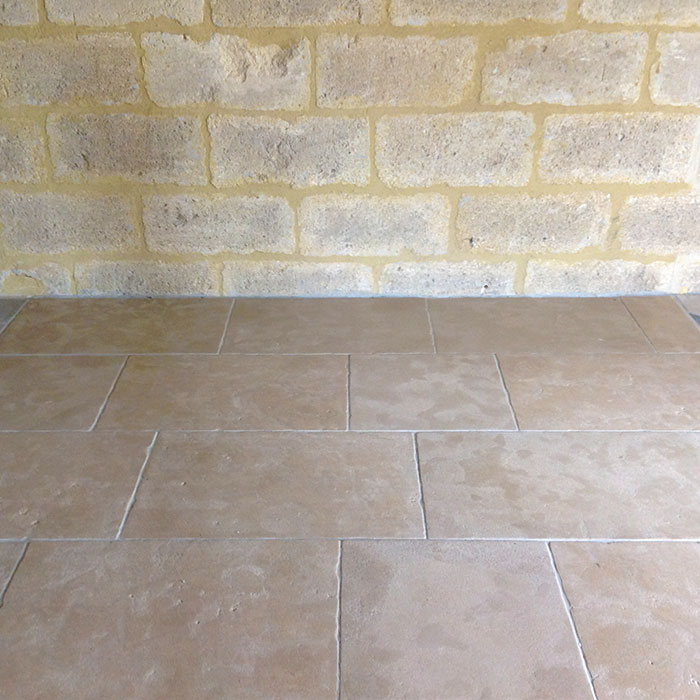
In many projects, antique French limestone flooring is chosen to recreate a regional feel. Dordogne stone, in particular, is associated with warm, lived-in interiors and outdoor terraces that blend into the landscape. A reference product such as Stone Flooring Dordogne illustrates that warm, natural presence that works well in kitchens, entry halls, and ground-floor living areas.
For another interpretation of Dordogne-style stone, Flagstone Cognac provides a richer, more textured feel that can elevate rustic renovations and Mediterranean-inspired homes. These tones can also balance bright walls and modern glazing by adding weight and warmth underfoot.
Chateau-style limestone: formal layouts and architectural presence
For more formal interiors, limestone floors are often selected to create a “chateau” atmosphere. This is not only about color. It is also about scale, surface movement, and how the stone reads across long perspectives. A product such as Stone Flooring Chateau suits large rooms and central circulation where the floor must carry the space.
In projects that require a cleaner, brighter mineral look, a complementary reference like White Flagstone can help lift darker interiors and create contrast with timber beams or darker joinery. Chateau-style selections are often used to anchor interiors with quiet elegance rather than decoration.
Outdoor continuity: limestone paving for terraces and pool areas
Limestone is often chosen to create continuity between interior floors and exterior terraces. This is a common request for Mediterranean properties and modern homes that open widely onto outdoor living areas. A product such as Stone Flooring Pool Coping illustrates how natural stone can be used in outdoor zones where durability and comfort matter.
Where steps are part of the design, elements like Stair tread help keep a consistent stone language across levels. This approach supports a cohesive architectural reading, especially when interior and exterior are visually connected.
Selection and installation: what to decide before you order
Successful limestone floors depend on selection and installation choices made early. Decide whether you want a more uniform tone or a naturally varied surface. Confirm the finish (antiqued, brushed, more structured) based on the project’s style and intended use. Consider transitions to other materials such as terracotta, reclaimed wood, or decorative wall tiles, so the floor remains coherent across the whole plan.
If you want help selecting the right limestone reference, share your project constraints and photos through the contact page. This is the most reliable way to align tone, finish, and intended use before moving forward.
 Français
  English